__________
Byler's Home Services Presents:
THE ROOF OF TRUTH
Honest Answers. Solid Roofing.
__________
FLAT ROOFING / BUSINESS OWNERS GUIDE
FLAT ROOFING: WHAT COMMERCIAL PROPERTY OWNERS NEED TO KNOW
An honest look at silicone, acrylic, urethane, and when restoring a commercial roof makes sense.
| A second life for your commercial roof
A commercial roof is a major investment. Between Missouri's summer heat, heavy rain, freezing temperatures, and seasonal storms, protecting that investment requires more than simply waiting for a leak to appear.
But when an aging flat or low-slope roof starts showing signs of wear, complete replacement isn't always the only option.
Commercial roof coatings and restoration systems can help protect certain existing roofing systems, improve their resistance to weather, and potentially extend their useful life without the expense and disruption of a full tear-off.
The important question is whether the existing roof is a suitable candidate for restoration.
| understanding commercial roof coatings
Roof coatings are fluid-applied materials designed to create a protective layer over a compatible existing roof surface.
Unlike a complete roof replacement, a coating system generally works with the existing roofing assembly rather than removing and rebuilding it.
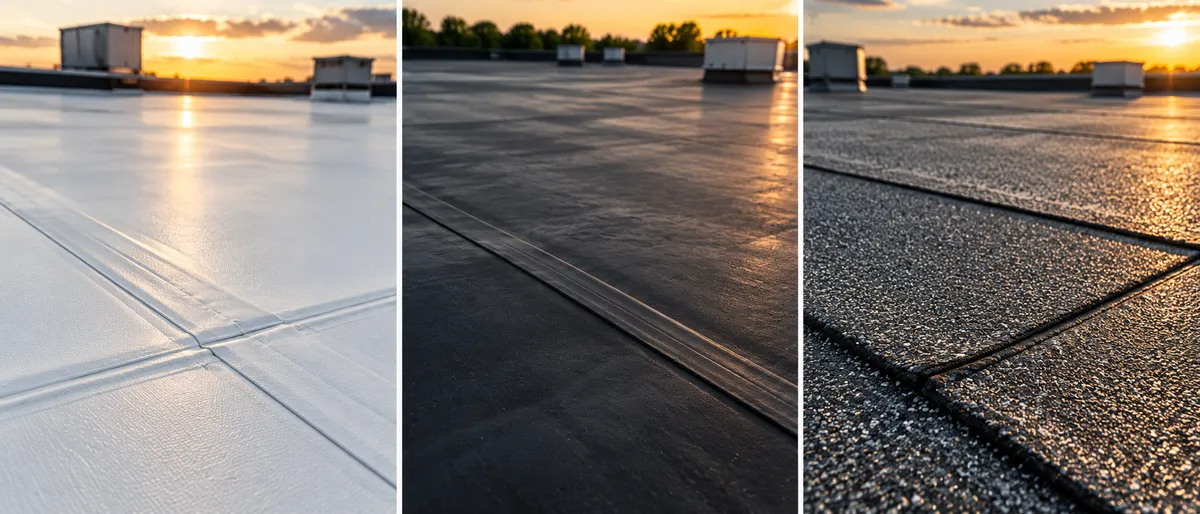
Different coatings have different strengths, application requirements, and limitations. Three common options are silicone, acrylic, and urethane.
| silicone coatings
Silicone coatings are known for their resistance to water and ultraviolet exposure. Certain silicone systems are specifically designed to withstand prolonged ponding water, making them a potential option for low-slope commercial roofs where drainage is a concern.
Advantages:
Strong resistance to UV exposure and weathering.
Some systems tolerate prolonged ponding water.
Can provide a flexible protective surface.
Considerations:
Dirt accumulation can affect reflectivity over time.
Recoating or repairing silicone surfaces requires compatible products and preparation.
Standing water still warrants a drainage assessment, even when the coating is rated for ponding.
| acrylic coatings
Acrylic coatings are generally water-based and commonly available in reflective finishes. They're often considered for commercial roofs with adequate drainage.
Advantages:
Reflective options can reduce solar heat absorption at the roof surface.
Water-based formulations are available.
Can be a cost-effective restoration option on suitable roofs.
Considerations:
Many acrylic products are not intended for prolonged ponding water.
Application depends on appropriate weather and curing conditions.
Performance varies with coating thickness, substrate, and maintenance.
| Urethane coatings
Urethane, also called polyurethane, coatings are often selected for their durability and resistance to abrasion. Different formulations may be used as base coats or topcoats within a restoration system.
Advantages:
Good abrasion resistance in suitable formulations.
Can be useful in roof areas exposed to maintenance traffic.
Some systems offer strong resistance to impact and weathering.
Considerations:
Product selection matters because not all urethane coatings have the same UV resistance.
Some systems require specific primers or multiple coating layers.
Installation and curing conditions must follow manufacturer requirements.
| restoration vs. replacement: what's the difference?
A roof restoration aims to preserve and protect an existing roofing system that still has sufficient structural integrity and is otherwise suitable for coating.
A full replacement involves removing or replacing roofing components when the existing assembly can no longer perform reliably.
| when restoration makes sense
A commercial roof may be a candidate for restoration when:
The existing roof assembly is generally sound.
Moisture damage is limited and can be appropriately addressed.
The roofing surface is compatible with a restoration system.
The roof's condition and drainage support a coating application.
| when replacement may be necessary
Restoration isn't a solution for every roof.
Extensive trapped moisture, deteriorated insulation, significant structural problems, or widespread failure of the existing roofing system may make replacement the more appropriate choice.
| preventative maintenance: protecting your investment
Even a properly restored commercial roof needs periodic attention.
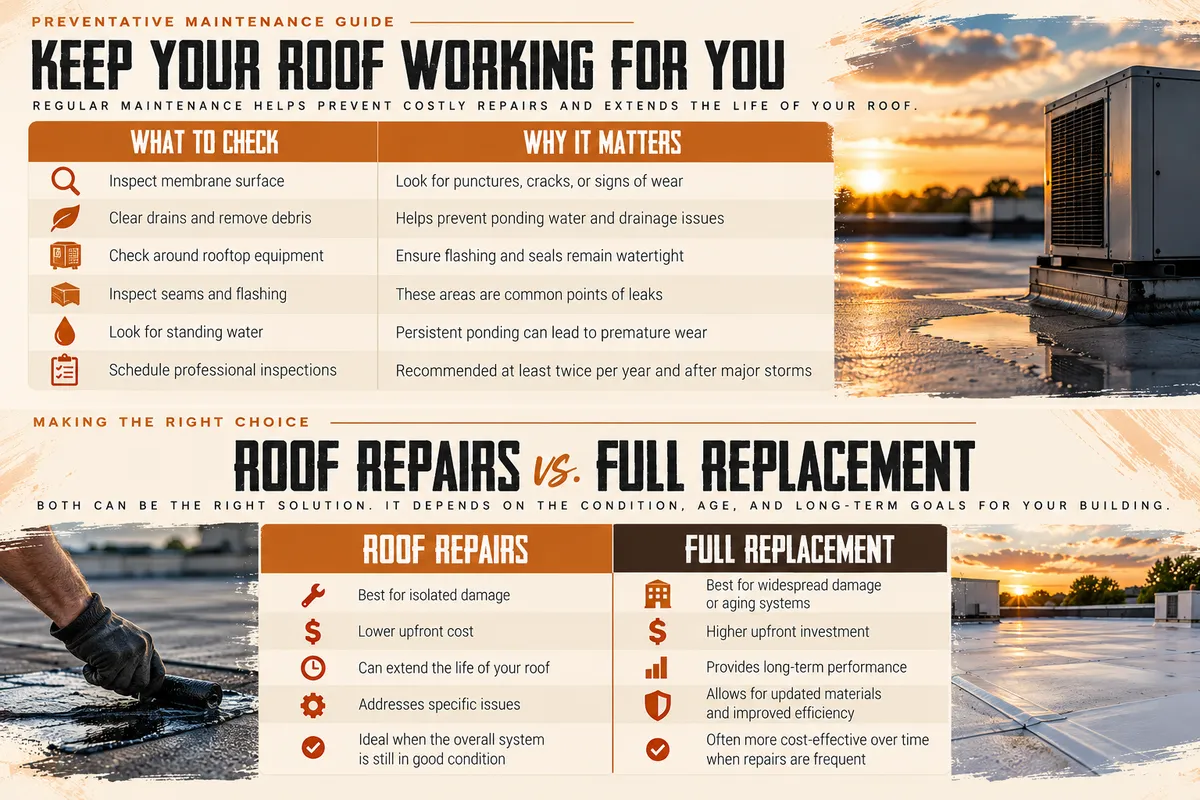
Property owners should arrange appropriate inspections, particularly after severe weather, and watch for changes in drainage, damaged roof surfaces, deteriorating penetrations, and recurring leaks.
Keeping drains and gutters clear can also help reduce unnecessary water accumulation.
Addressing concerns early may prevent minor problems from becoming more expensive repairs.
| the roof of truth: the cheapest roof isn't always the best investment
Commercial roofing decisions should be based on more than the initial installation price. A lower-cost system may be perfectly appropriate for one property, while another building may benefit from a different assembly with a higher initial investment.
The important question is how the roof will perform over its expected service life.
Consider installation quality, maintenance needs, potential business interruptions, energy performance, repairability, and future replacement costs. A coating can protect a suitable roof, but it cannot fix structural damage or make a failing roof assembly sound again.
A well-planned commercial roof is part of protecting the financial health of a property. Choosing the right system means understanding both what you're paying today and what the roof may require tomorrow.
| ready to protect your commercial property?
Your roof is an important part of your building's long-term performance.
Whether you're planning a commercial roofing project, evaluating an aging system, or addressing a persistent roofing concern, Byler's Home Services is ready to discuss your options.
Explore More
Quality roofing and exterior work built around honest service, dependable craftsmanship, and doing the job right.
LICENSING and COMPLIANCE
Licensed
Insured
OSHA-10 Certified
DIRECT SUPPORT
Mon - Fri: 8:00 AM - 5:00 PM
Emergency Inspections Available
(417) 650-0941
Fully licensed, bonded, and insured roofing contractor.