
__________
Byler's Home Services Presents:
THE ROOF OF TRUTH
Honest Answers. Solid Roofing.
__________
INSPECTIONS / A PRACTICAL GUIDE
ROOF INSPECTIONS: WHAT YOU NEED TO KNOW
Because knowing what's happening above your head shouldn't be a guessing game.
| small problems, big consequences
Your roof works hard every single day. It protects your home and business from heavy rain, strong winds, hail, summer heat, and everything else Missouri weather throws its way.
But here's the problem: most roofing issues aren't obvious from the ground.
A few loose shingles, deteriorating flashing, or moisture getting beneath your roofing materials can go unnoticed until there's a stain on your ceiling...or a much bigger repair bill.
That's where a professional roof inspection comes in.
At Byler's, we believe homeowners deserve to understand the condition of their roof before making expensive decisions.
| what is a roof inspection?
A roof inspection is a professional evaluation of your roof's visible condition, including its materials, vulnerable areas, and signs of damage or deterioration.
The goal isn't necessarily to find something that needs replacing. It's to identify potential problems, assess existing damage, and help you understand what your roof actually needs. A thorough inspection may evaluate several important areas, depending on the roof's design, accessibility, and safety conditions.
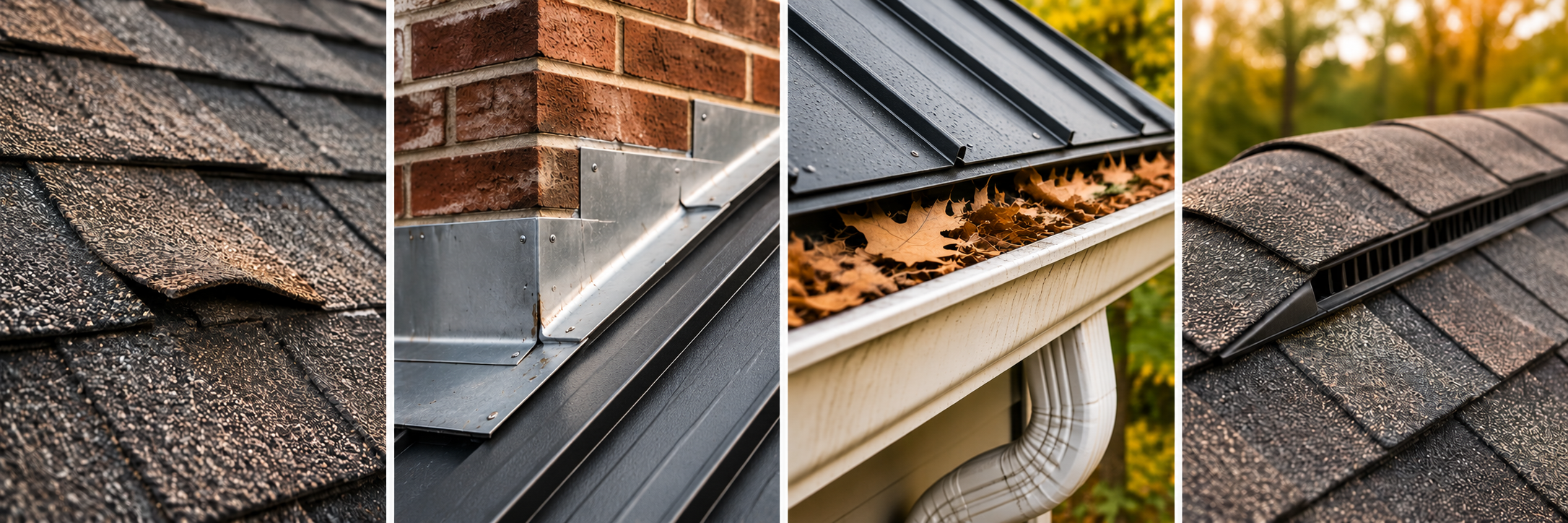
1. Roofing Materials
Whether your roof has asphalt shingles or metal panels, its outer surface provides the first line of defense against the elements.
An inspector may look for:
Missing, cracked, curled, or lifted shingles
Loose or damaged metal panels
Exposed or deteriorating fasteners
Rust, corrosion, or damaged protective finishes
Unusual wear patterns or areas of deterioration
Even relatively small defects can create opportunities for water intrusion.
2. Flashing and Roof Penetrations
Flashing helps direct water away from vulnerable areas where different roof surfaces meet. These include chimneys, vents, skylights, roof valleys, and transitions between roof sections.
Inspectors look for visible separation, corrosion, damaged sealant, or other conditions that could allow moisture to enter. A roof can have perfectly good shingles and still leak around improperly sealed or damaged flashing.
3. Gutters and Drainage
Your roof doesn't just need to keep water out. It needs to move water away from your home.
An inspection may identify visible issues such as clogged gutters, damaged downspouts, poor drainage, or water collecting where it shouldn't.
For low-slope commercial roofing, drainage is especially important because standing water can contribute to premature deterioration.
4. Roof Edges, Ridges, and Ventilation
Roof edges and ridgelines are exposed to wind and weather.
An inspector may evaluate visible ridge caps, edge materials, and ventilation components for damage or deterioration.
Proper attic ventilation can also play a role in managing heat and moisture, although a complete ventilation assessment may require access to additional areas of the home.
5. Signs of Moisture or Structural Concerns
Some roofing problems reveal themselves through changes in the roof's appearance.
Visible sagging, soft-looking areas, deteriorated decking, or interior water stains may indicate a more serious issue.
An exterior roof inspection cannot always reveal concealed damage. Additional evaluation may be necessary when signs suggest a problem beneath the roofing materials.
| when should you schedule a roof inspection?
You don't have to wait until your ceiling starts dripping. There are several situations where a professional inspection makes sense.
• After a Major Storm
High winds, hail, and falling debris can damage roofing materials without causing an immediate leak. A post-storm inspection can help identify visible damage and determine whether repairs may be necessary.
• When Buying or Selling a Home or Business
A roof is one of a property's most important—and potentially expensive—components. Understanding its condition can help buyers make informed decisions and help sellers address concerns before they become obstacles during a transaction.
A roofing inspection complements, rather than replaces, a general home inspection.
• When Your Roof Is Getting Older
Every roofing material has a finite service life, and its actual longevity depends on installation quality, weather exposure, maintenance, and other factors.
If your roof is approaching the later stages of its expected service life, an inspection can help you plan for future maintenance or replacement.
• When You Notice Something Unusual
Water stains, missing shingles, loose metal, unusual roofline changes, or recurring gutter problems are all good reasons to request an inspection. The earlier a problem is evaluated, the more options you may have for addressing it.
• As Part of Routine Maintenance
For many homes, scheduling a professional inspection approximately once a year—and after significant storms—is a reasonable preventive maintenance approach.
The right frequency depends on the roof's age, material, condition, and exposure to severe weather.
| what happens if an inspection finds damage?
Finding damage doesn't automatically mean you need a new roof. Depending on the condition and extent of the problem, your options might include:
•Minor repairs: Addressing localized damage, replacing individual roofing components, or correcting a specific leak source.
• Maintenance: Removing accumulated debris, addressing drainage issues, or planning preventive work.
• Further evaluation: Investigating suspected moisture intrusion, structural concerns, or concealed damage that isn't visible during the initial inspection.
• Roof replacement: Considering a larger project when damage is widespread, the roof has deteriorated significantly, or repairs are no longer a practical long-term solution.
The right recommendation depends on the roof itself, not a one-size-fits-all sales pitch.
| roof inspections and insurance claims
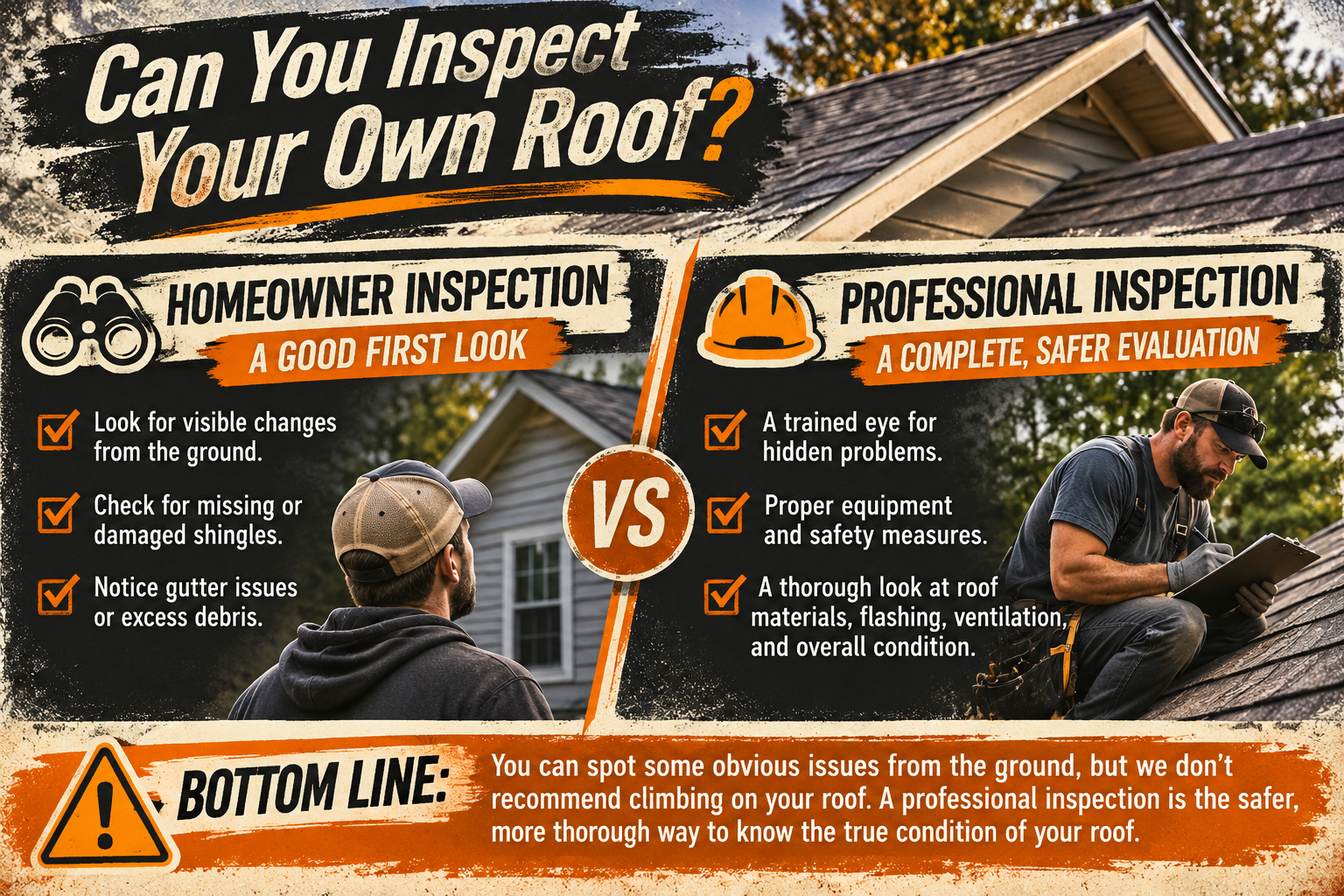
After a storm, many homeowners wonder whether they should contact their insurance company. A roofing inspection can help identify and document visible conditions, but it does not determine whether an insurance claim will be approved.
Coverage decisions depend on your policy, the cause of the damage, and your insurance company's evaluation.
If you suspect storm damage, photograph visible issues from a safe location, review your policy, and contact your insurer when appropriate. Avoid assuming every mark on a roof is covered storm damage, or that every damaged roof requires complete replacement.
| the roof of truth: Inspections matter, especially in southwest Missouri
Home and business owners in Buffalo, Dallas County, and surrounding Missouri communities deal with a wide range of weather conditions throughout the year. Strong thunderstorms, high winds, hail, freezing temperatures, and summer heat can all contribute to roofing wear.
And because damage doesn't always become obvious immediately, a roof can develop problems long before water reaches your ceiling.
Regular inspections help homeowners make informed decisions, plan for repairs, and avoid being caught off guard by preventable issues
| ready to know your roof?
Your roof is too important to leave to guesswork.
Whether you've recently experienced severe weather, noticed something concerning, or simply want to understand the condition of your roofing system, a professional inspection is a practical place to start.
At Byler's, we offer roof inspections for homeowners and property owners in Buffalo, Missouri, and surrounding communities.
Contact Byler's Home Services to schedule your free roof inspection.
Call (417) 650-0941 or request an inspection online.
Explore More
Quality roofing and exterior work built around honest service, dependable craftsmanship, and doing the job right.
LICENSING and COMPLIANCE
Licensed
Insured
OSHA-10 Certified
DIRECT SUPPORT
Mon - Fri: 8:00 AM - 5:00 PM
Emergency Inspections Available
(417) 650-0941
Fully licensed, bonded, and insured roofing contractor.