
__________
Byler's Home Services Presents:
THE ROOF OF TRUTH
Honest Answers. Solid Roofing.
__________
ROOF DAMAGE/A PRACTICAL GUIDE
storm damage: what to know
From hail and high winds to hidden roof damage, here's what Missouri homeowners should know about protecting their property after a storm.
| when the storm passes, the damage may remain
Missouri weather doesn't always give homeowners much warning. One afternoon might bring sunshine and clear skies. By evening, strong winds, heavy rain, and hail could be moving through your neighborhood.
While some storm damage is immediately obvious, other problems can go unnoticed for weeks or even months.
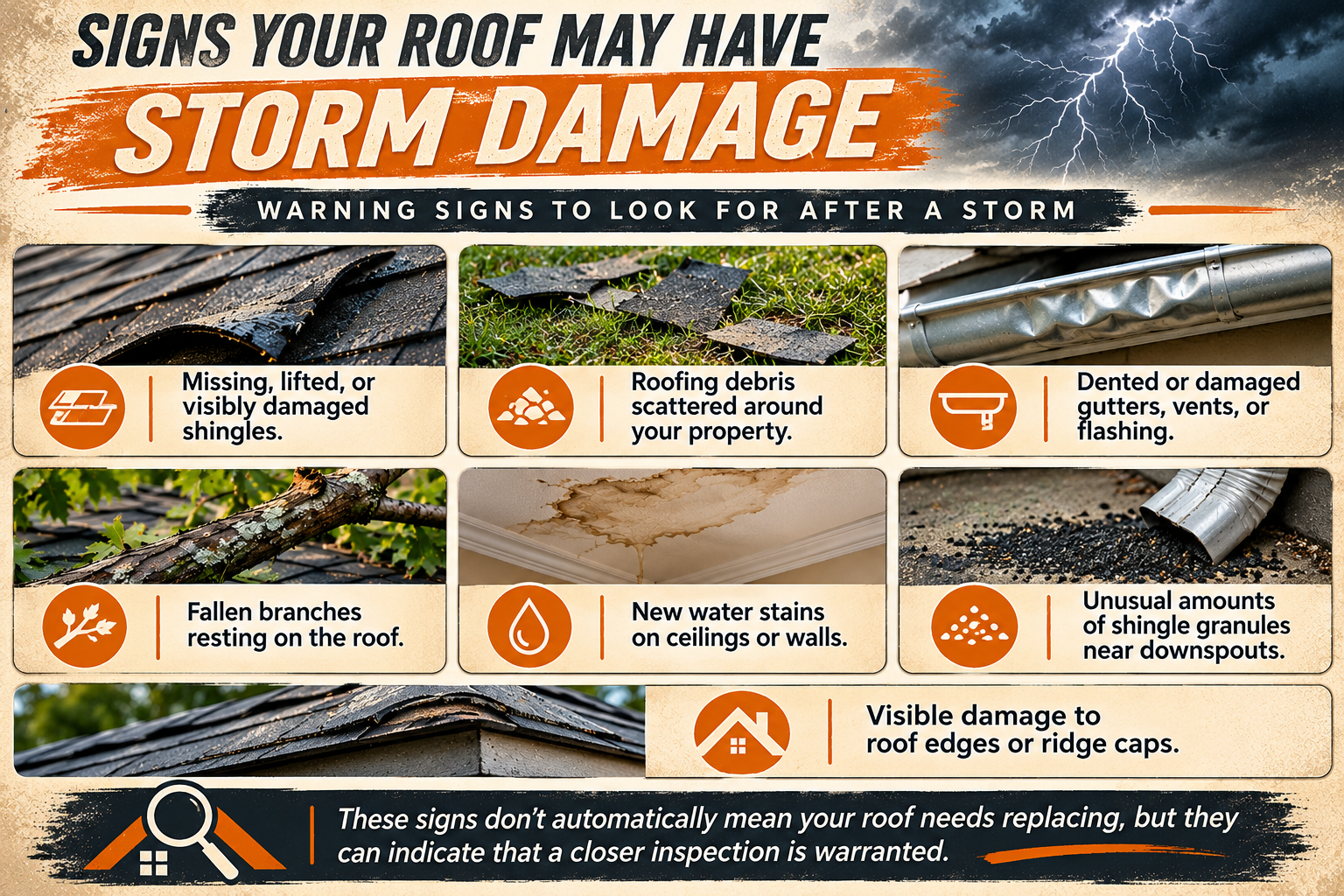
Missing shingles, damaged flashing, and fallen branches are easy to recognize. But hail impacts, loosened roofing materials, and compromised seals may be harder to spot from the ground. Understanding what to look for after severe weather can help you address problems before they turn into expensive repairs.
| common types of storm damage
Not every storm affects a roof the same way. The type and severity of damage depend on the weather conditions, roofing materials, roof age, and overall condition of the building.
| hail damage
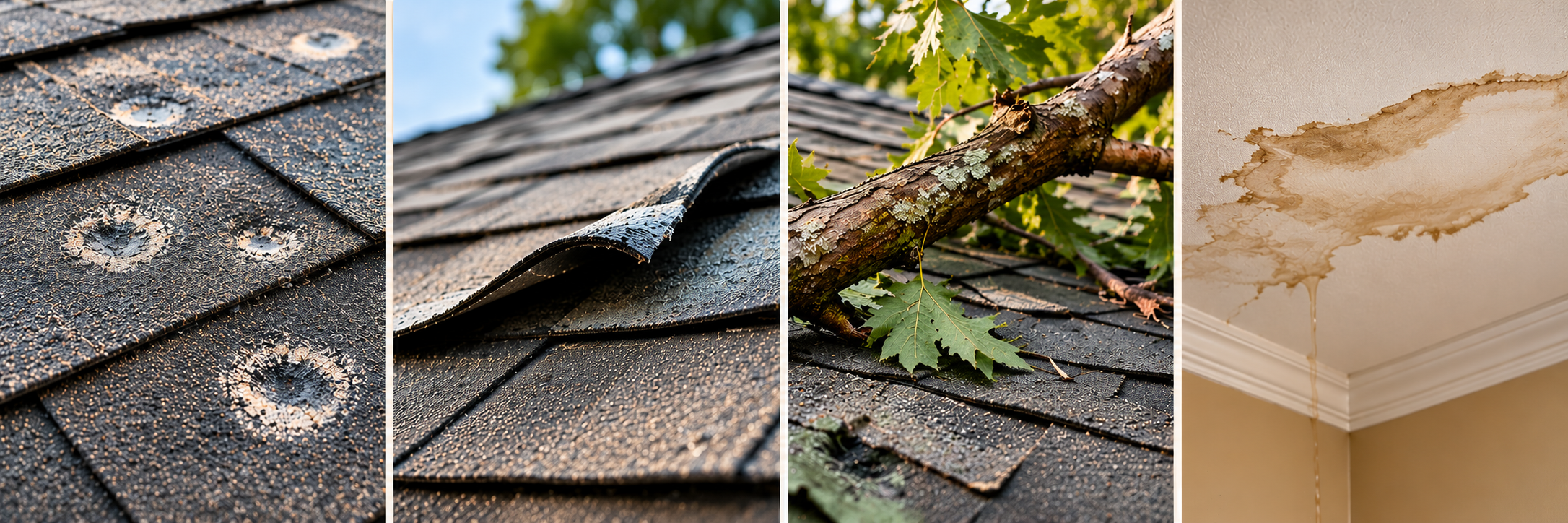
Hail can damage asphalt shingles, metal roofing, vents, flashing, and other exposed roofing components.
On asphalt shingles, significant hail impacts may cause bruising, fractures, or granule loss that exposes the underlying asphalt. Metal roofing may develop dents or other damage depending on the size and force of the hail.
Not every dent or mark means a roof needs replacement. The important distinction is whether the damage affects the roofing system's ability to protect the building.
| wind damage
Strong winds can lift, loosen, crease, or tear roofing materials.
Asphalt shingles are particularly vulnerable when their adhesive seals have deteriorated or when the shingles are already damaged. Wind can also affect ridge caps, flashing, gutters, and other roof components.
Even when shingles remain attached, lifted or broken seals may leave portions of the roof vulnerable to future water intrusion.
| fallen branches and flying debris
Tree limbs and windborne debris can puncture roofing materials, damage gutters, or affect the roof decking beneath the surface.
Large impacts may also create structural concerns that aren't immediately visible.
If a tree or substantial branch has struck your roof, avoid entering any visibly damaged area of the building until it's safe to do so.
| heavy rain and water intrusion
Heavy rain doesn't necessarily damage a healthy roof on its own, but it can reveal existing weaknesses.
Damaged flashing, deteriorated seals, missing shingles, and clogged drainage systems may allow water to enter the building.
Water stains on ceilings or walls, damp insulation, and unexplained moisture can all indicate a roofing problem.
| what to do after a severe storm
When the weather clears, it's tempting to climb onto the roof and see what happened.
But storm-damaged roofs can be dangerous, especially when surfaces are wet, materials are loose, or structural damage is possible.
1. MAKE SURE EVERYONE IS SAFE
Stay away from downed power lines, unstable trees, and visibly damaged portions of the building.
If you suspect structural damage, prioritize safety before assessing the roof.
2. DOCUMENT VISIBLE DAMAGE
Take photos of damage you can safely see from the ground.
Photograph fallen debris, missing shingles, damaged gutters, and any interior water stains. Record the approximate date and time of the storm.
3. PREVENT ADDITIONAL DAMAGE WHEN SAFE
If water is entering your home, move belongings away from affected areas when possible.
For significant leaks or exposed roofing, contact a qualified professional about appropriate temporary protection. Avoid climbing onto the roof or attempting unsafe repairs yourself.
4. SCHEDULE A PROFESSIONAL ROOF INSPECTION
A professional inspection can help determine whether damage is cosmetic, localized, or potentially affecting the roof's performance.
It can also help establish whether repairs may be sufficient or whether more extensive work is necessary.
5. CONTACT YOUR INSURANCE COMPANY IF APPROPRIATE
If the damage may be covered by your homeowners insurance, contact your insurer to understand the claims process.
Keep photos, inspection findings, receipts, and other relevant documentation.
Coverage depends on your specific policy, the cause of damage, and the insurer's determination.
| does storm damage always mean roof replacement?
Absolutely not.
Some storm damage can be addressed with targeted repairs, particularly when the surrounding roofing system remains in good condition.
For example, replacing a limited number of damaged shingles or addressing isolated flashing damage may be sufficient in certain situations.
However, widespread damage, extensive material deterioration, or problems affecting the underlying roofing assembly may justify replacement. The decision should be based on the actual condition of the roof rather than assuming every storm requires a completely new one.
| what about insurance claims?
Storm-related roofing repairs may be covered under some homeowners insurance policies, but coverage isn't automatic.
Insurance companies consider factors such as the cause of damage, policy exclusions, deductibles, roof condition, and applicable coverage limits.
A roofing contractor can provide an assessment of the roof's condition and an estimate for necessary work.
However, the insurance company determines coverage under the policy, and homeowners should review their policy documents carefully. Be cautious of anyone promising that insurance will automatically pay for an entire roof replacement.
| why timely repairs matter
A small roofing problem can become more serious when exposed to additional rain, wind, and temperature changes.
A lifted shingle may allow water to reach the underlayment. Damaged flashing may permit moisture intrusion around a chimney or vent. A small leak may eventually affect insulation, ceilings, or other building materials.
Addressing confirmed damage promptly can help reduce the risk of additional deterioration. That doesn't mean every minor mark is an emergency.
It means understanding the difference between cosmetic wear and damage that compromises your roof's ability to protect your home.
| the roof of truth: don't wait for the next storm to find the damage
If severe weather has recently passed through your area, don't ignore signs that your roof may have been affected. A roof can look perfectly fine from your driveway and still have damage that deserves attention.
An inspection can help you understand the condition of your roof and determine whether repairs are needed. A trustworthy roofing assessment should focus on what your roof actually needs, not simply what someone hopes an insurance company will approve.
| storm damage with Byler's home services
At Byler's, we understand how quickly Missouri weather can change; and how stressful unexpected roof damage can be.
We provide storm damage roofing services for homeowners and businesses throughout Buffalo, Missouri, and surrounding communities.
Whether you're dealing with missing shingles, wind damage, hail impacts, or other storm-related roofing concerns, we're here to help you understand your repair options.
Our goal is simple: straightforward information, dependable workmanship, and roofing solutions that make sense for your property.
Explore More
Quality roofing and exterior work built around honest service, dependable craftsmanship, and doing the job right.
LICENSING and COMPLIANCE
Licensed
Insured
OSHA-10 Certified
DIRECT SUPPORT
Mon - Fri: 8:00 AM - 5:00 PM
Emergency Inspections Available
(417) 650-0941
Fully licensed, bonded, and insured roofing contractor.